
Homes by Region
Discover how climate, culture, and local materials shape the architecture of rural India.

Mud & Thatch Huts (Jhopdi)
Rajasthan
Materials:
Mud
Cow Dung
Straw
Climate Adaptation:
Thick walls keep interiors cool in extreme heat.
Cultural Notes:
Walls are often decorated with Mandana art.
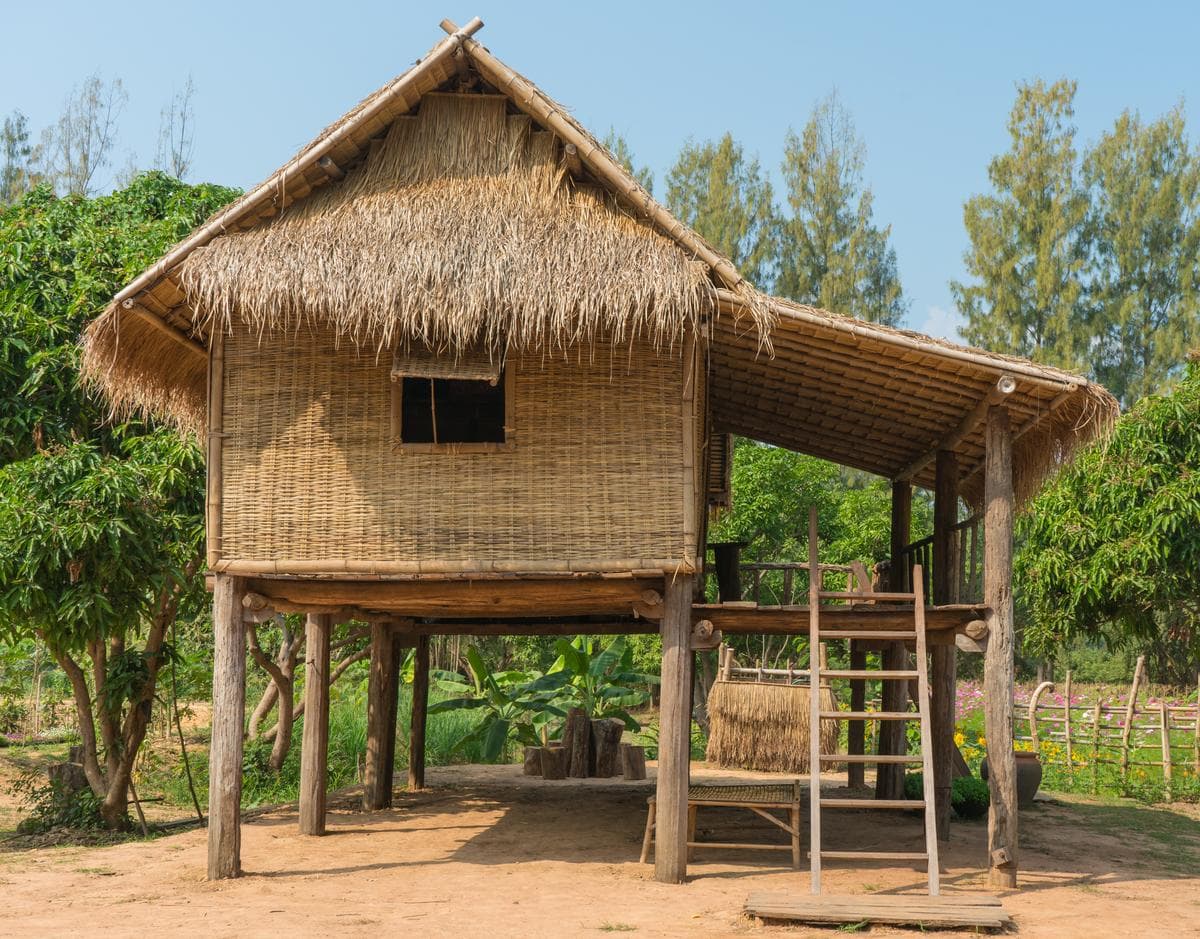
Chang Ghar (Raised Huts)
Assam
Materials:
Bamboo
Cane
Wood
Climate Adaptation:
Elevated on stilts to protect from floods in the Brahmaputra plains.
Cultural Notes:
Weaving looms are often kept underneath the house.
The Art of Sustainable Building
An exploration of the traditional, eco-friendly materials used in village construction.
Mud & Clay
Excellent natural insulator, keeping homes cool in summer and warm in winter. It is cheap, abundant, and easy to repair.
Bamboo & Cane
Highly sustainable and flexible, making it ideal for earthquake-prone regions. It is lightweight yet strong.
Laterite Stone
A porous, iron-rich rock found in coastal and humid areas. It hardens on exposure to air, making it a durable building material.
Cow Dung Plaster
A natural, anti-bacterial plaster that also acts as an insect repellent. It is used for both floors and walls.
Thatch & Palm Leaves
Used for roofing in many tribal and coastal homes, providing excellent, breathable insulation.
Where Home Meets Heart
Exploring the cultural and ritualistic elements that make a house a home.

Tulsi Vrindavan
A sacred basil plant in a decorated pot, usually placed in the courtyard for worship.

Aangan (Courtyard)
An open central space for socializing, ceremonies, and household chores.

Mandana Wall Art
Folk art painted on walls and floors to welcome gods and mark celebrations.